
Model I: Zoo architecture
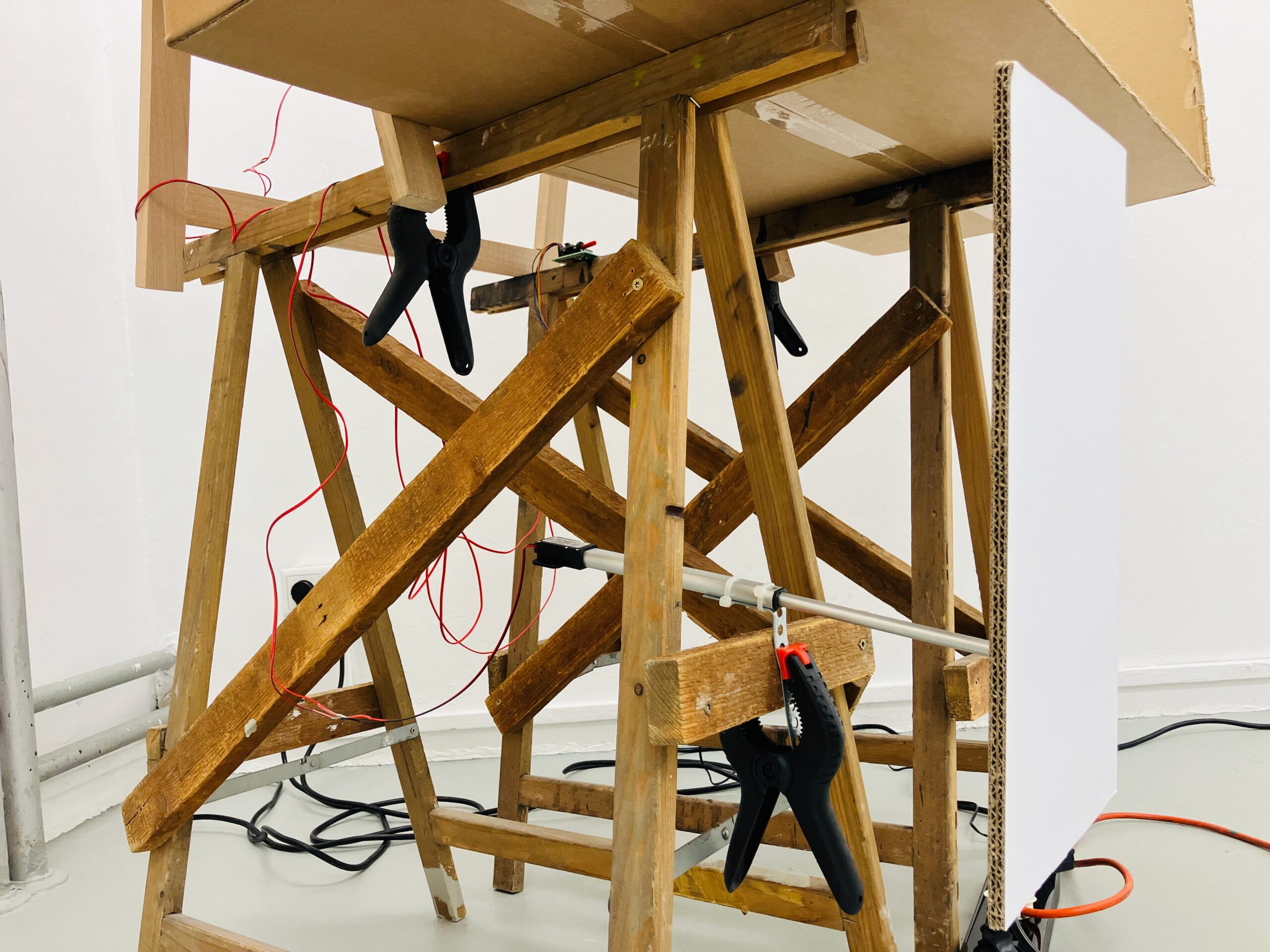
This work was presented at the Rijksakademie open studios. 30 May – 2 June 2024. It was preceded by the film program; The Journey of the Hyena convened at the Rijksakademie in April, 2024.
Model I: Zoo architecture
Link: https://vimeo.com/1052606652/9b5490cdd4?share=copy
The format of working using models and situating the studio as a thinking machine continues from a previous method of inquiry called ‘How clouds are formed’. The idea is that work begins with a question and using an array of tools, it is then assembled in many parts using objects, images, spare parts & movements. Here the model acts as a foundation of intersecting ideas that can be reworked constantly and in various site-specific formats. In both approaches my work becomes an exercise in thinking about processes that occur outside of us and how we can intervene by observing, recording and measuring.
Model I: Zoo architecture considers the zoo as a site of intervention by observing and modelling its architecture inside the artists studio. Footage of sea lions frolicking in the aquarium and donkeys enjoying a day without work outside my studio in Kenya is played against the projected image of a crow under my table. This poetic image of an uncaged bird was encountered on the street during a trip to the zoo to look at other caged birds.
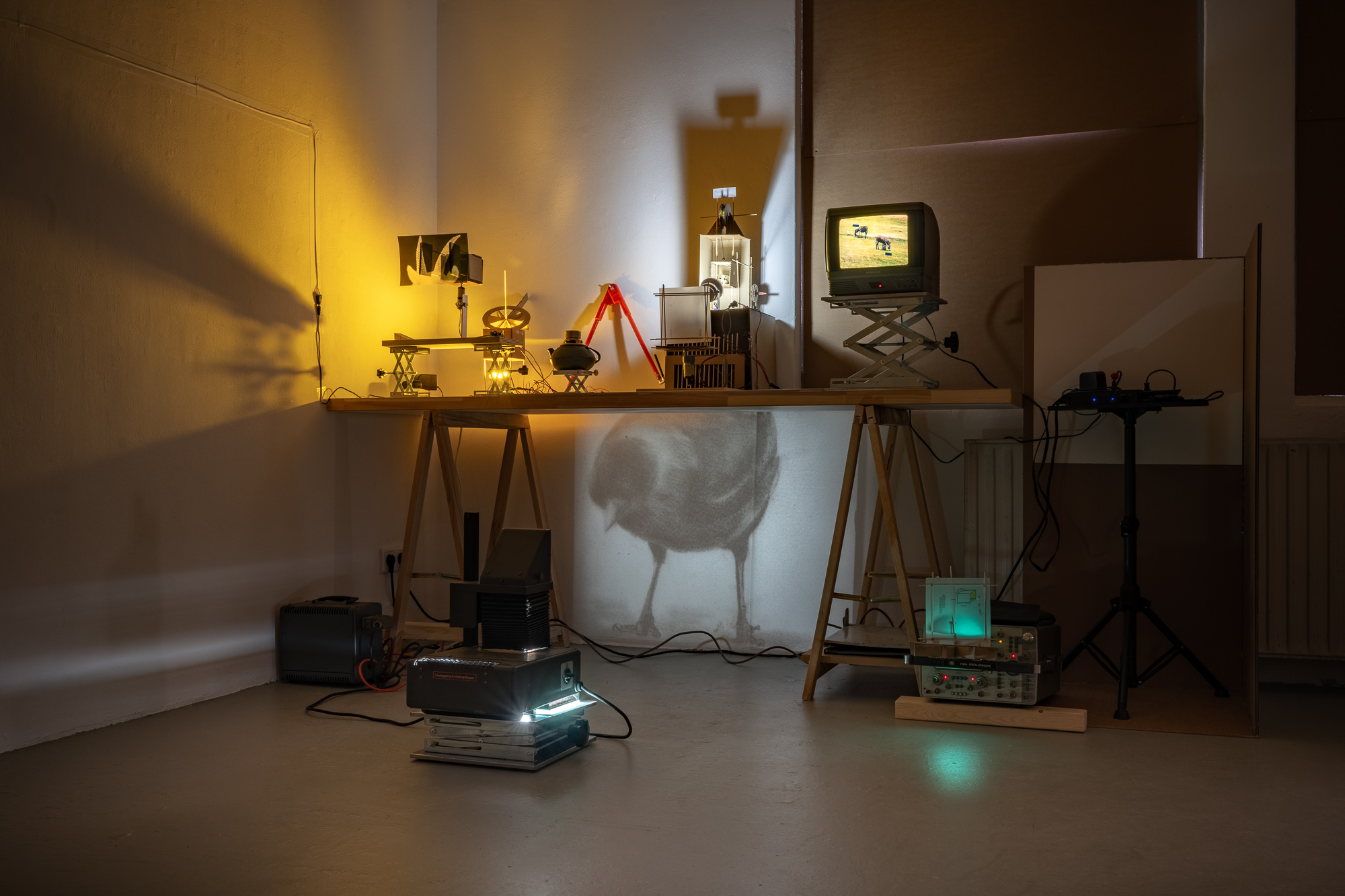
Model I: zoo architecture | Photo by Sander van Wettum
The apparatus establishing & dismantling itself; I
Link: https://vimeo.com/965524351/35736d8c2d?share=copy
Looking at animals is used as a method to give form & structure to drawings produced from visits to the Amsterdam Zoo (ARTIS); whereby these cumulative glances are understood as gathering evidence. The work locates the zoo as a site of intervention while the link between animal, machine, cinema and architecture is explored through obstructed and compromised glances since the animals are viewed at a distance. Distance here to be understood as measurement, a record from the past & to regard any species as spectacle, exotic or alien.
The use of analogue projectors emits the image as light as opposed to digital pixelation. It also refers to a time when such devices were used in dimmed European lecture halls to project images & research material of animals, plants & humans looted & uprooted from their homes, habitats & native environments. In this tension, the motors attached to the screens move back and forth seeking to intercept the image halfway while the autofocus on the projector attempts to render it with sharpness & legibility before it moves away again.
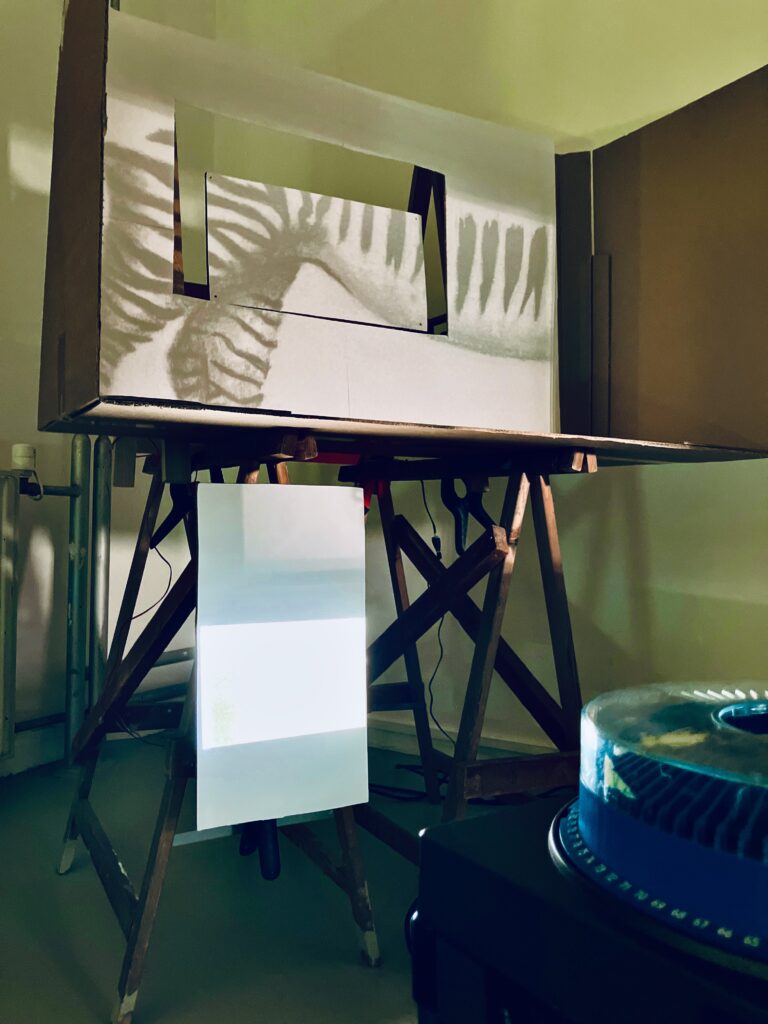
The apparatus establishing & dismantling itself; I
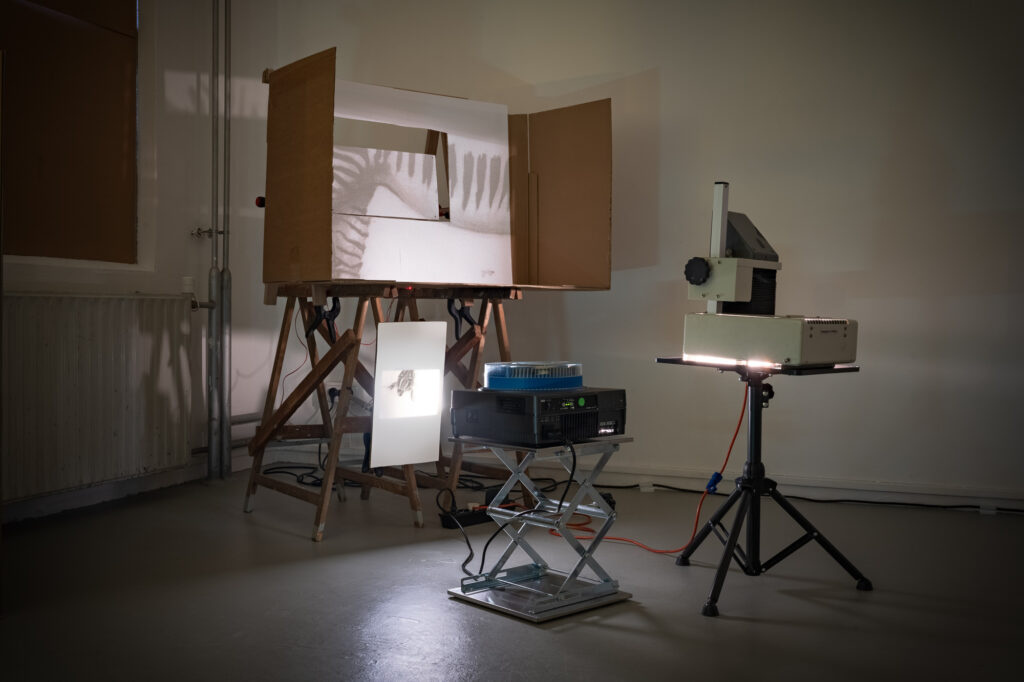
The apparatus establishing & dismantling itself; I
The apparatus establishing & dismantling itself; II
Link: https://vimeo.com/966519514/c552cc81f2?share=copy
The installation is largely a question of modernity, the tension that comes with the need for progress and the consequences of this acceleration. Observations of animals in their man-made environments frame zoos as colonial structures in Europe and their architecture becomes a form to think with. The dynamism within this static environment is seen in the numerous monkey enclosures which become activated with rope formations hung to aid the animals in mobility and play.
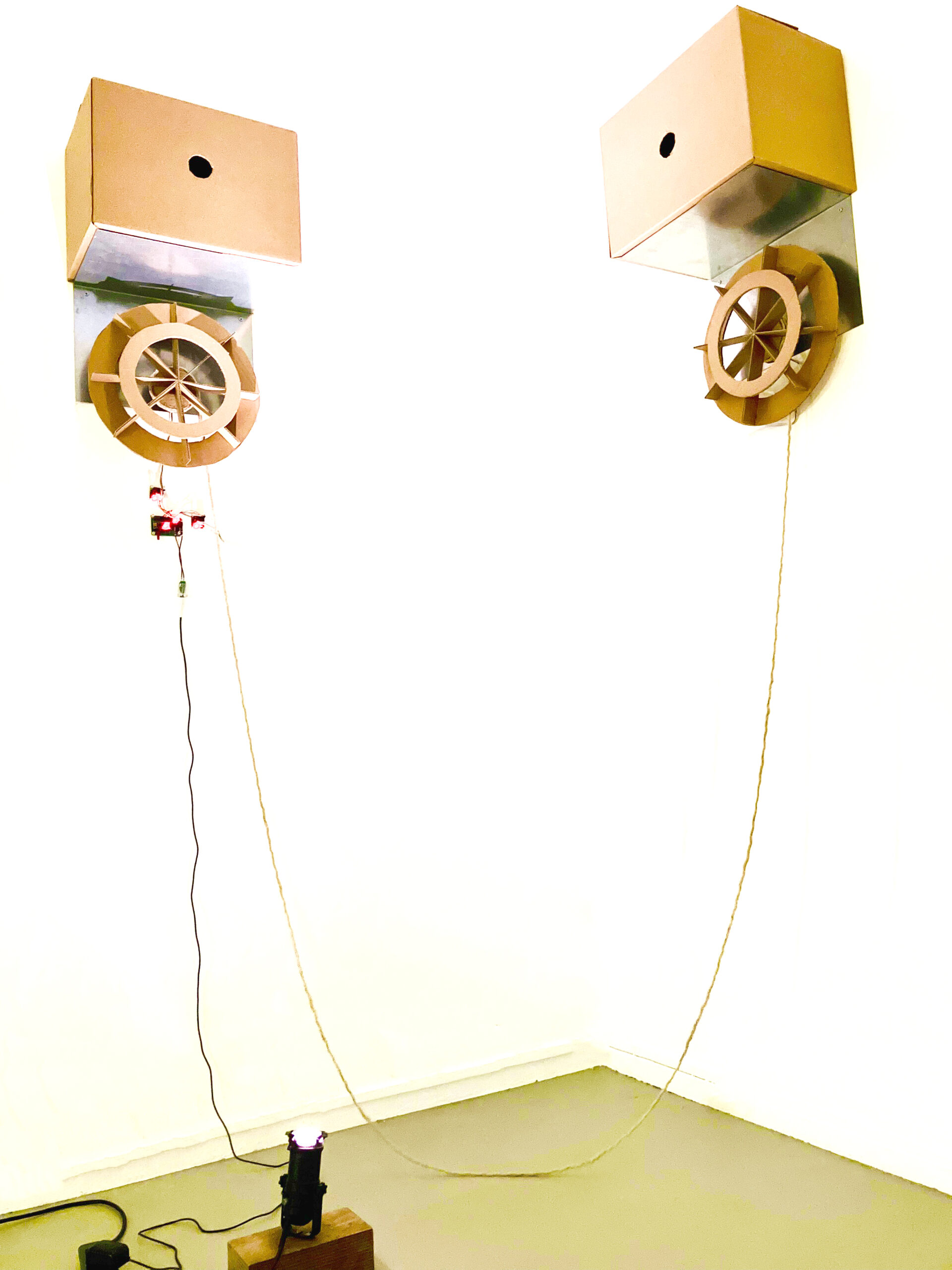
The apparatus establishing & dismantling itself, II
All images courtesy of the artist
©Jackie Karuti


